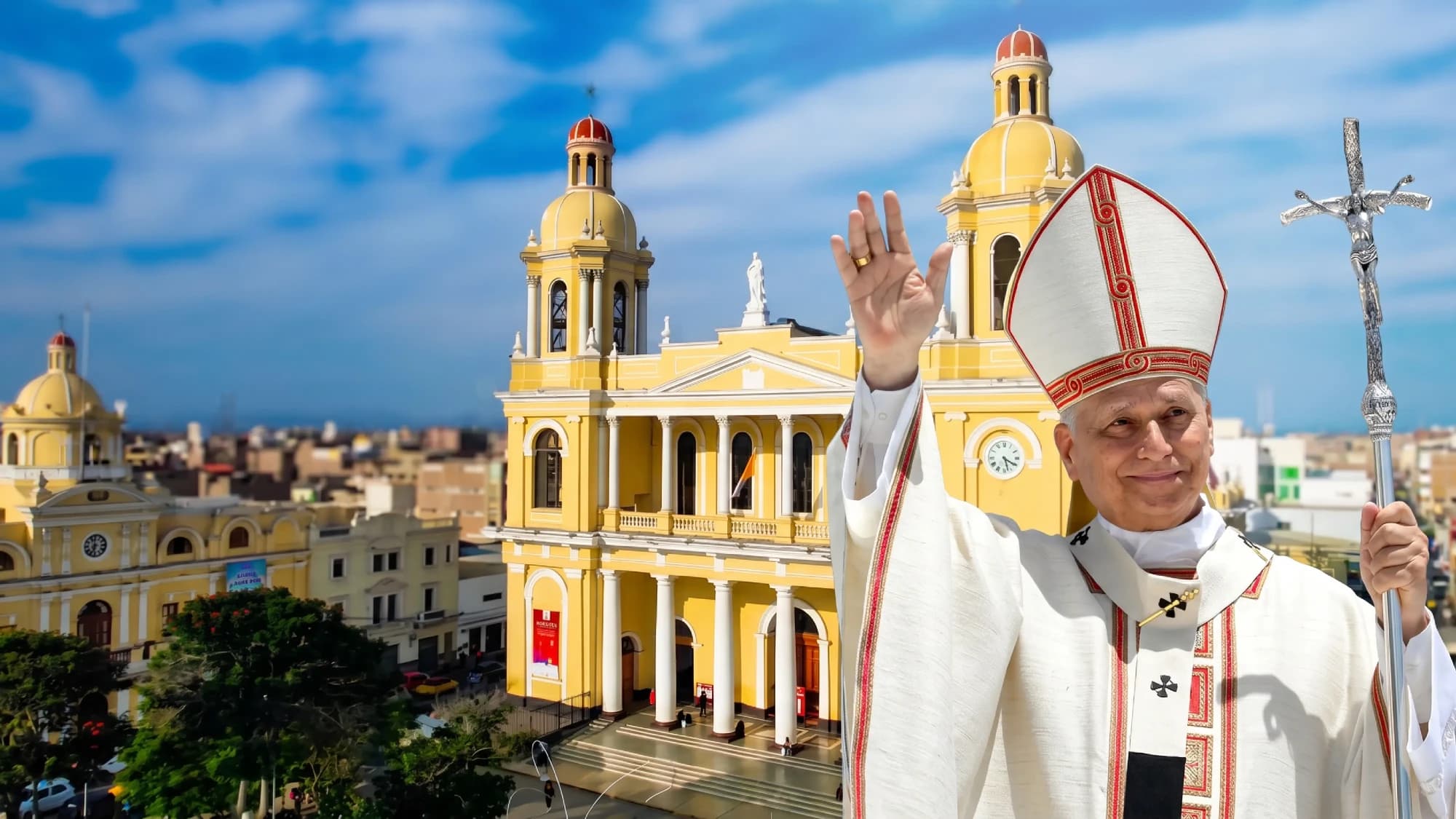
What to do in Chiclayo in 3 days: a guide to the best of Lambayeque
Planning a trip to northern Peru and not sure where to start? Chiclayo is an excellent base for discovering the history, food and landscapes of Lambayeque. In just three days you can visit museums holding the treasures of ancient civilizations, walk by the sea, try traditional dishes and get to know towns full of culture.
Editorial Zentra
Zentra team
Share
The key is to plan your itinerary well so you make the most of your time without rushing from one place to the next.
In this guide we suggest what to do in Chiclayo in 3 days, with activities for each day, places to eat and tips for planning your stay.
Day 1: discover downtown Chiclayo and its food
Your first day is ideal for getting to know the city, its main public spaces and some of the flavors that have made Lambayeque cooking famous.
Walk around the Plaza de Armas and Chiclayo Cathedral
Start the morning downtown, around the Plaza de Armas. Here you can visit the Cathedral of Santa María and take in one of Chiclayo's most iconic spaces.
Take the chance to stroll around, take photos and get a feel for the city's everyday rhythm.
If you are interested in Lambayeque's religious history, you can also add some of the places linked to Pope Leo XIV's Route.
Try Lambayeque cooking
No visit to Chiclayo is complete without time set aside for its food. Local cooking combines coastal ingredients with traditional recipes that are part of the region's identity.
At lunch, look for a chance to try one of these dishes:
·Arroz con pato. A traditional dish of seasoned rice, duck and coriander.
·Seco de cabrito. A northern classic of stewed goat, usually served with rice and beans.
·Espesado. A dish made from Andean corn, traditionally served with beef and other ingredients.
·Chinguirito. An emblematic dish made with dried salted fish and seasonings.
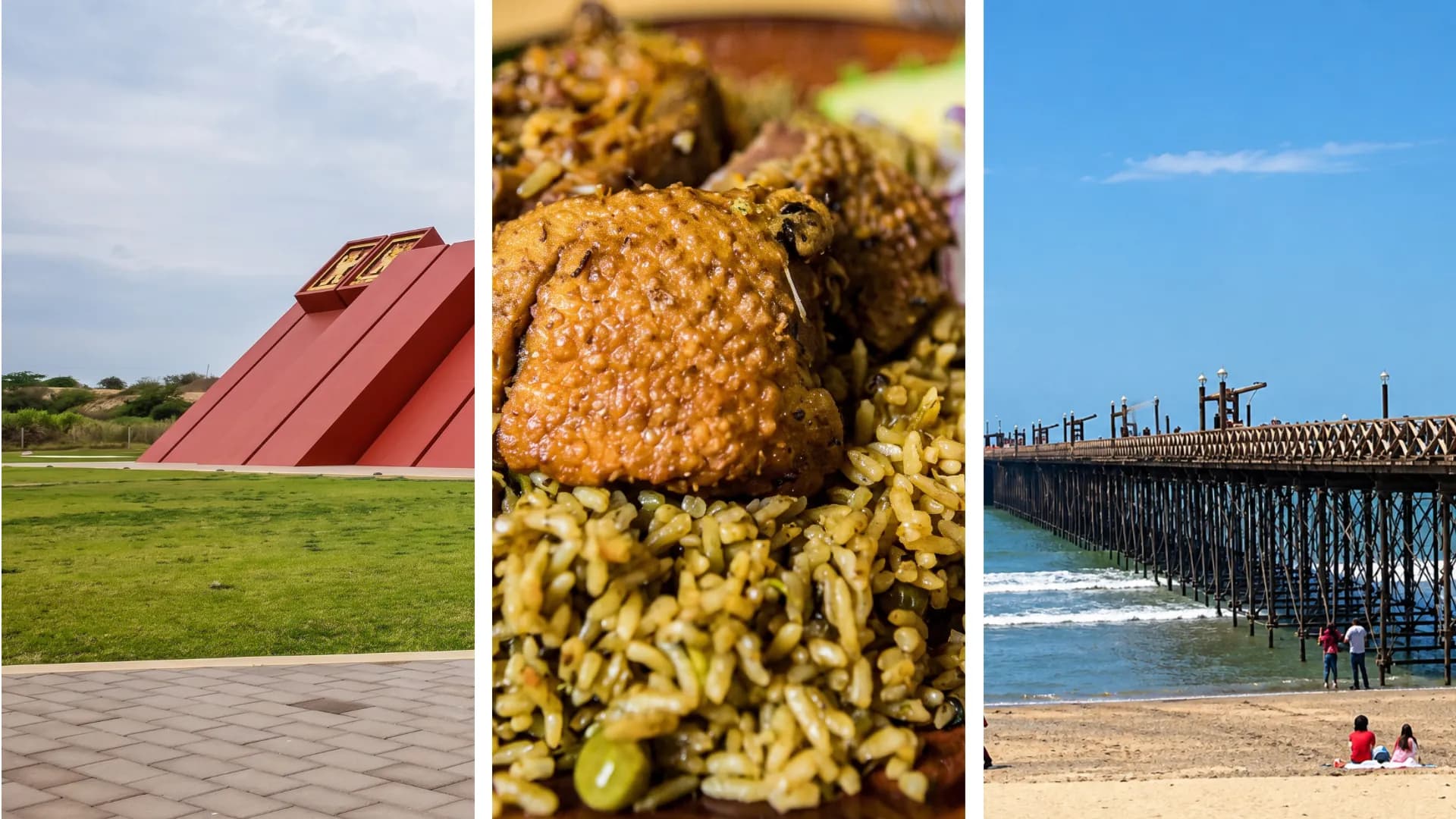
Arroz con pato is one of the signature dishes of Lambayeque cooking.
If you would rather eat by the sea, you can save the ceviche experience for one of the restaurants in Pimentel.
Visit the Paseo Yortuque
In the afternoon, you can stroll along the Paseo Yortuque, an urban promenade with sculptures depicting elements of Lambayeque's history and mythology.
It is a good option for walking outdoors, taking photos and discovering part of the region's cultural identity without leaving the city.
End the day with a relaxed dinner
After exploring downtown, use the evening to have dinner and rest. On a short trip, sleeping well is part of good planning too: you will have more energy for the excursions of the following days.
Day 2: explore Lambayeque's archaeological legacy
Save your second day for one of the region's great attractions: its archaeological heritage.
Lambayeque preserves remains of ancient civilizations and museums that help you understand the history of northern Peru. The Royal Tombs of Sipán Museum and the Brüning National Archaeological Museum are two highlights for visitors to the area.
Visit the Royal Tombs of Sipán Museum
If there is one place that deserves a spot on your itinerary, it is the Royal Tombs of Sipán Museum, in the city of Lambayeque.
The museum holds an important collection related to the Moche culture and the archaeological discovery of the tomb of the Lord of Sipán. Its galleries display ceremonial objects, ornaments and other pieces that help explain the power and customs of this ancient society.
The museum's architecture echoes the truncated pyramids of the Moche culture.
Planning your visit
Details
Address
Av. Juan Pablo Vizcardo y Guzmán 895, Lambayeque
Usual published hours
Tuesday to Sunday, 9:00 a.m. to 5:00 p.m.
Published general admission
S/ 10
Continue at the Brüning National Archaeological Museum
Make the most of your time in Lambayeque by visiting the Brüning Museum, whose archaeological and ethnographic collections broaden the picture of the cultures that lived in this region.
It is a good way to build on what you saw at the Royal Tombs and spend more time on the history, art and traditions of northern Peru.
Have lunch and explore the city of Lambayeque
After the museums, you can stop for lunch and walk around before heading back to Chiclayo.
Grouping the museums on the same day cuts down on travel and makes better use of your time.
An option for archaeology lovers: Huaca Rajada-Sipán
If you would like to be closer to where the discoveries were made, consider a visit to the Huaca Rajada-Sipán complex and its site museum.
Day 3: enjoy Pimentel and discover the traditions of Monsefú
After two days devoted to the city and its history, the third day is perfect for a change of scene: the coast and the traditions of nearby towns.
Walk along the Pimentel pier
Start the morning in the beach town of Pimentel, one of Lambayeque's best-known coastal destinations.
Its pier is one of the main attractions. You can walk around, watch the sea and see the area's traditional fishing, including the iconic caballitos de totora reed boats.
The Pimentel pier is one of the best-known seaside walks in Lambayeque.
It is a good place to take photos, enjoy the sea breeze and start the day at an easy pace.
Enjoy the beach and the coastline
Spend part of the morning walking along the beach or simply taking in the view.
If you travel during a windy season or when the sea is rougher, check local conditions and follow safety instructions. There is no need to fill every hour with activities: this is also a good moment to rest.
Have lunch by the sea
Before leaving Pimentel, find a restaurant where you can enjoy some seafood.
Ceviche is one of the best-known options, though you will also find other fish and shellfish dishes. If you would rather avoid seafood, ask about the alternatives on offer.
Visit Monsefú and its crafts
In the afternoon, head to Monsefú, a town known for its craft tradition, its embroidery, weaving and cultural expressions.
Browsing its markets and craft workshops is a great way to discover the work of local makers and take home a souvenir of your trip.
If your visit coincides with a festival, check the program in advance, as activities may vary by date.
Return to Chiclayo to round off your trip
At the end of the day, head back to Chiclayo to rest and get ready for your journey home.
If you have extra time, use your last evening for dinner, a spot you did not get to, or simply a quiet night in.
Where to stay to see Chiclayo in 3 days
To make the most of a short itinerary, choose accommodation that lets you plan your outings and come back comfortably after each day.
Zentra Hotel offers accommodation options in Chiclayo for travelers coming for leisure, work or a mix of both. You can use the city as your base for visiting downtown, the Lambayeque museums, Pimentel and other nearby destinations.
If you are traveling in high season, book ahead and confirm which of our locations best suits your itinerary.
Tips for planning your trip to Chiclayo
Before you set off, keep these recommendations in mind:
·Group destinations by area. Grouping your visits cuts down on travel and leaves more time to enjoy each place.
·Check museum opening hours. Some open only on certain days and have different fees.
·Bring comfortable clothes and sun protection. You will need them both at the archaeological sites and on the coast.
·Set aside time to eat. Food is a big part of the Lambayeque experience.
·Confirm your transport. If you are visiting places outside Chiclayo, check in advance how to get there and back.
·Leave room to improvise. A good guide helps you get organized, but it is just as important to enjoy the trip without rushing.
Chiclayo awaits: three days to discover much more
In three days you can get a first taste of everything that makes Lambayeque special: the history of its ancient civilizations, the richness of its food, the calm of its beaches and the traditions of its towns.
This itinerary is a starting point. Adapt it to your interests, the time you have and the places that appeal to you most.
TagsChiclayoItinerariesLambayequeFoodThings to do in Chiclayo



 Chiclayo